Egypt
Serabit el-Khadim
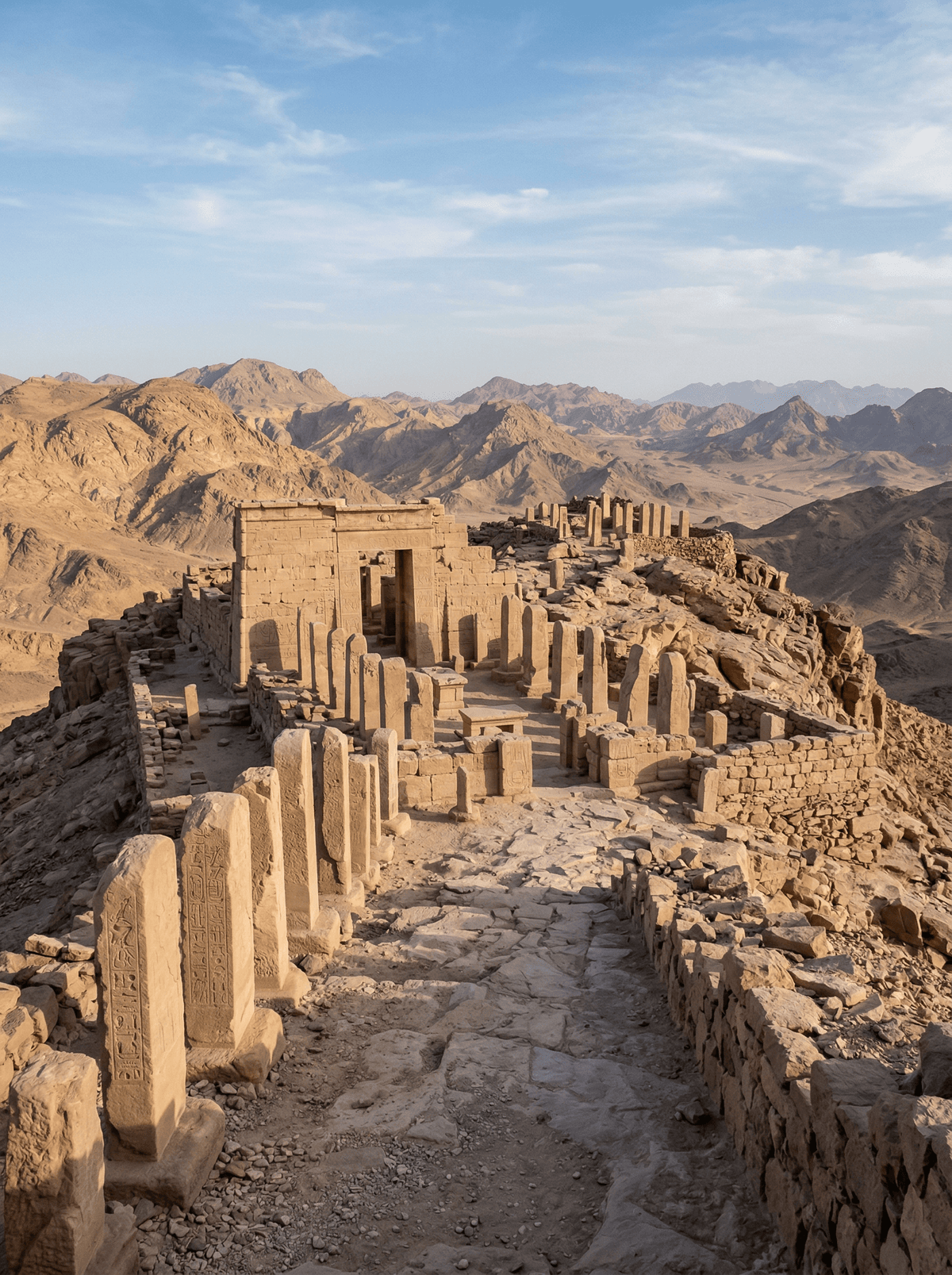
Turquoise mines and a Hathor temple on a Sinai peak where an early alphabet was carved.
The turquoise veins are still visible in the rock face, exactly where Egyptian miners cut them four thousand years ago. Above the mines, on the wind-blasted summit plateau, the temple of Hathor stands open to the sky, its sandstone walls inscribed with records of expeditions sent by pharaohs who considered this remote Sinai mountaintop worth the march. Somewhere among these inscriptions, workers scratched symbols that may be the earliest alphabet ever written.
Serabit el-Khadim is an ancient Egyptian turquoise mining complex and temple site on a high plateau in Egypt's South Sinai, active from the Middle Kingdom through the New Kingdom — roughly 2000 to 1100 BCE. The temple of Hathor, goddess of turquoise, was built directly beside the mines and expanded by successive pharaohs who sent military-escorted expeditions across the desert to extract the prized blue-green stone. The Proto-Sinaitic inscriptions found here in 1905 by Flinders Petrie are among the oldest known examples of alphabetic writing, believed to have been carved by Semitic-speaking workers in the mines. The site requires a 4x4 journey from the Gulf of Suez coast followed by a steep scramble to the plateau, and it sits in open desert with no facilities, fencing, or interpretive signage. The isolation preserves its atmosphere: you stand where ancient miners stood, with the same wind, the same turquoise seams, and the same view of the Sinai ranges stretching to the horizon.
Solo
This is archaeology for the self-reliant: no guides, no signs, no safety rails. A solo traveller with a Bedouin driver and a knowledge of Egyptian history will find Serabit el-Khadim among the most evocative sites in Sinai.
Friends
The 4x4 approach, the scramble to the summit, and the exposed plateau location make this a proper adventure outing. A group with shared transport and a Bedouin guide can combine it with Ain Khudra or the Coloured Canyon.
- Inscriptions found here in 1905 by Flinders Petrie — scratched by Semitic turquoise miners around 1900 BC — are the earliest known examples of alphabetic writing.
- The turquoise mines at Wadi Maghara nearby were worked intermittently from the First Dynasty through the New Kingdom — over 2,000 years of continuous extraction.
- Mining tools, sketched cartouches, and incomplete inscriptions remain exposed in the quarry walls with no protective covering.
- The 40-minute hike to the Hathor temple crosses a rocky escarpment with views across the entire interior plateau of the Sinai.
Bedouin guide-cooked meals at a mountain camp: flatbread, goat cheese, and sage tea.
Pack supplies from Abu Zenima on the coast — the mountain has nothing but ruins and wind.
The descent rewards you with fresh seafood at the small Gulf of Suez fishing villages below.
Gaua
Vanuatu
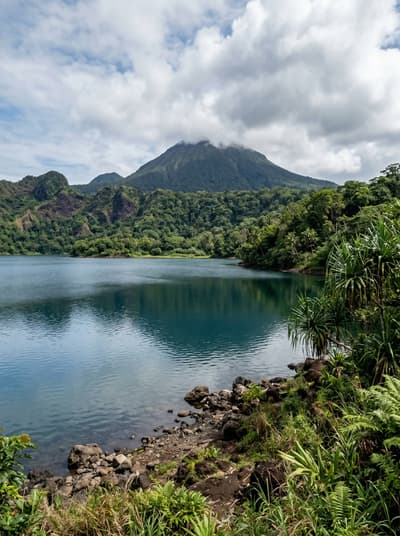
A volcanic lake drains into the ocean via a waterfall that plunges through untouched jungle.
Quebrada de Humahuaca
Argentina
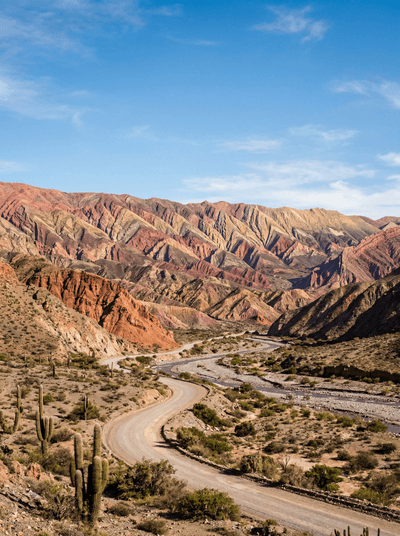
A canyon of fourteen-colour hills where Inca trails thread through villages older than the conquest.
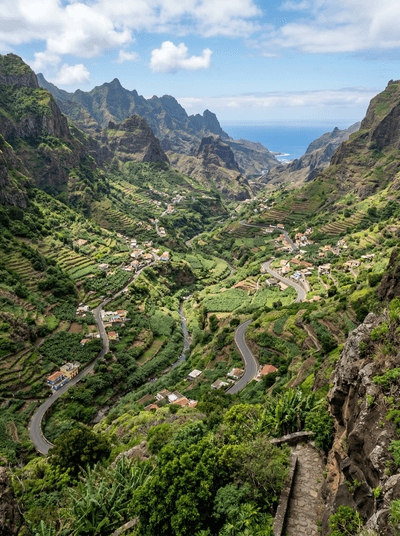
Vale do Paúl
Cape Verde
Sugarcane terraces spill down a volcanic crater into the greenest valley in the archipelago.
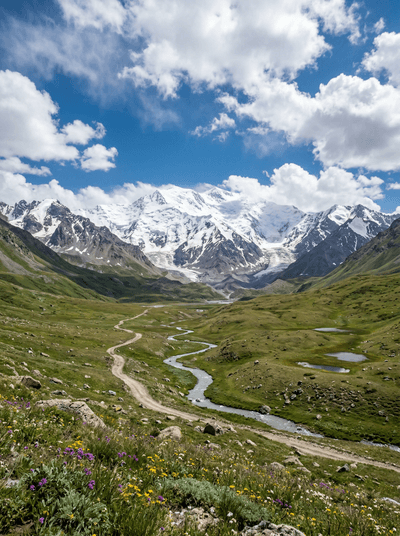
Achik-Tash
Kyrgyzstan
Yurt camps at 3,600 metres beneath a 7,134-metre peak, alpinists and trekkers sharing vodka at sunset.
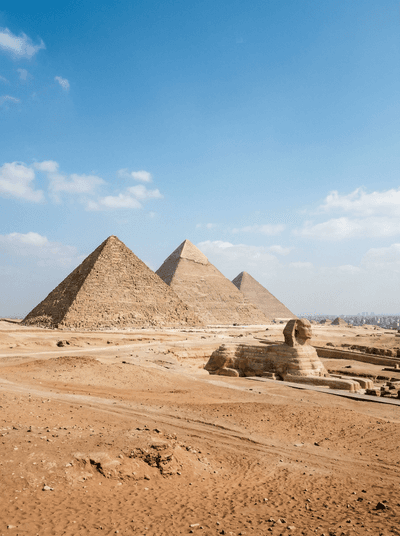
Giza
Egypt
Camel shadows stretch across sand where the last ancient wonder meets the Sahara's edge.
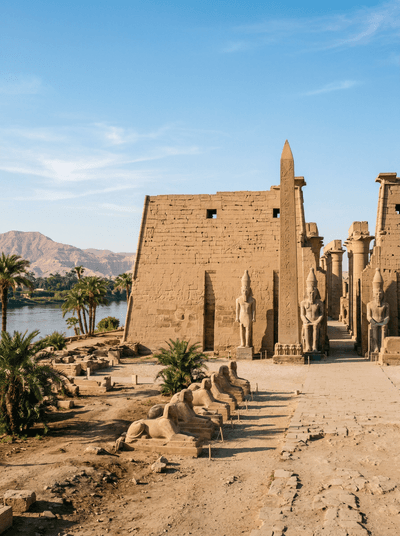
Luxor
Egypt
Dawn light flooding Karnak's hypostyle hall through columns carved before Rome existed.
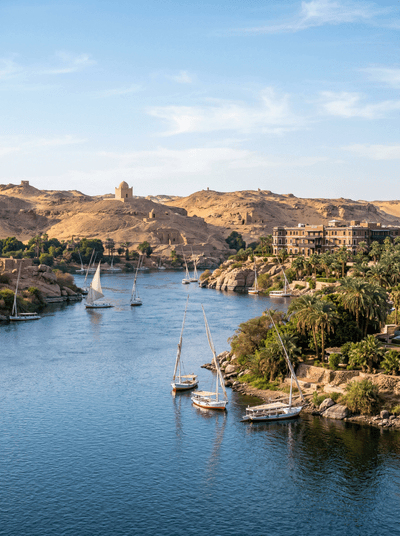
Aswan
Egypt
Feluccas gliding past granite islands where the Nile runs quietest and Nubian colour blazes.
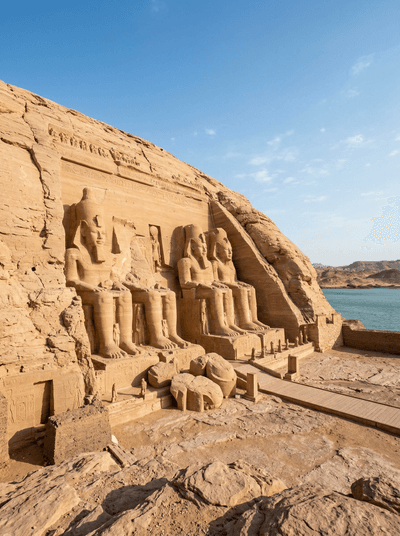
Abu Simbel
Egypt
Twice a year, dawn crawls sixty metres through solid rock to light a pharaoh's face.