Saudi Arabia
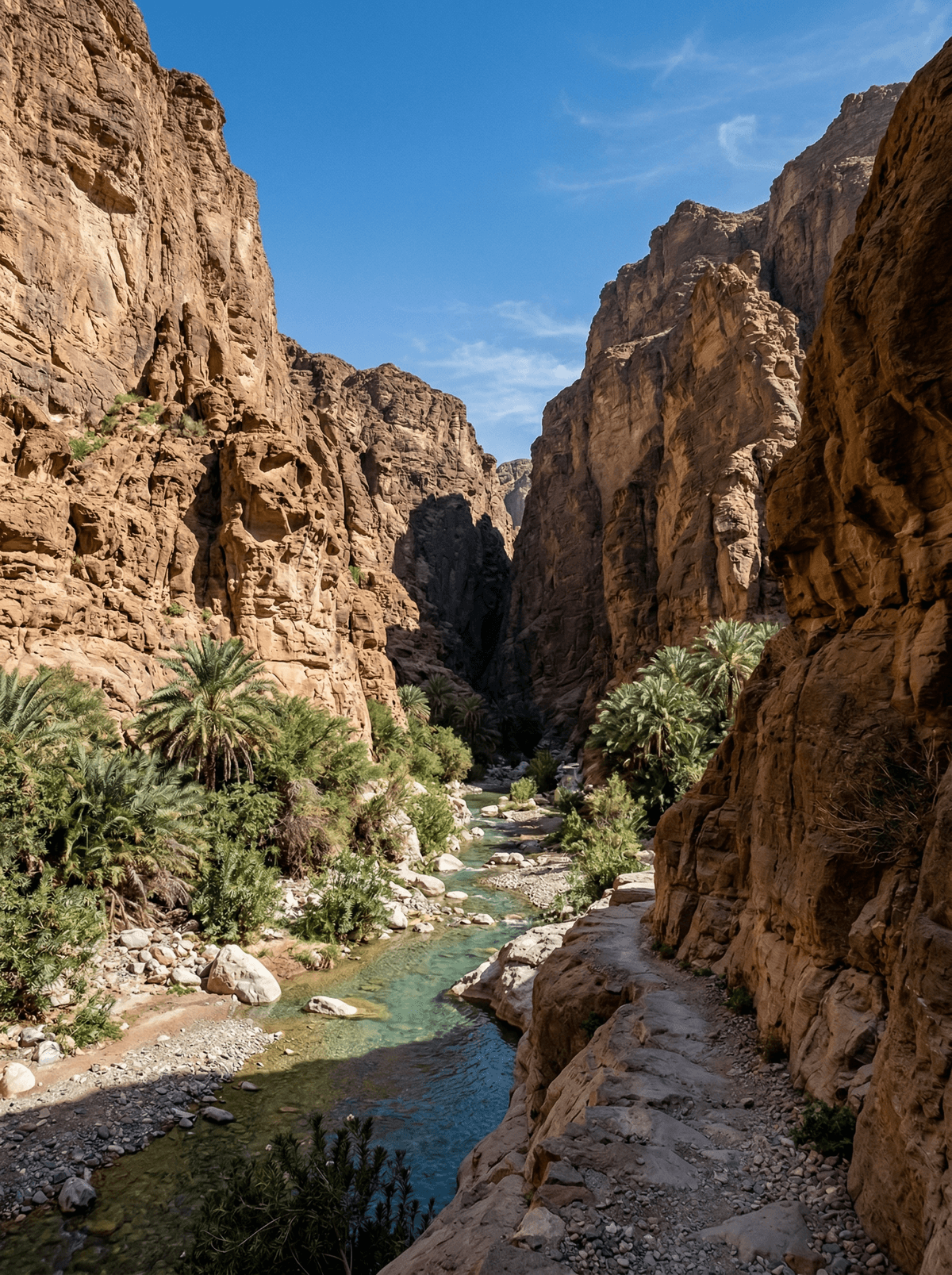
Wadi Tayyib al-Ism
A desert canyon splitting open to reveal a hidden cove of turquoise Red Sea water.
The canyon walls rise sheer and close on both sides, the sky a ribbon of blue overhead, and the only direction is forward. Then the walls open, the air changes from dust to salt, and there it is — a hidden cove of turquoise water lapping against red rock where the desert canyon meets the Red Sea. The reveal is cinematic, and no amount of warning quite prepares you for it.
Wadi Tayyib al-Ism is a sandstone canyon in Saudi Arabia's Tabuk region that terminates at the Red Sea coast in a secluded cove. The canyon is narrow and dry for most of its length, with walls rising hundreds of metres in bands of red and cream sandstone. The hike through the canyon takes several hours, ending with an abrupt transition from desert to sea — the salt air arrives before the view does. Some traditions identify this canyon as the route of Moses' crossing, though the historical evidence is debated. There is no infrastructure at the cove — no road, no buildings, no boats — making the arrival feel like a genuine discovery rather than a tourist endpoint.
Solo
Hiking the canyon alone amplifies the reveal — the sea appears without anyone to dilute the moment of seeing it for the first time.
Couple
The private cove at the canyon's end, with no one else present, is as romantic as a destination can be without trying.
Friends
The hike is long enough to challenge a group, and the hidden cove at the end is a payoff worth sharing.
- The canyon walls narrow to a few metres before splitting open to reveal a turquoise Red Sea cove.
- The hike through the canyon is dry and shadowed — then suddenly there is salt air and breaking waves.
- Rock formations in the canyon walls are layered in bands of red, ochre, and cream.
- No infrastructure, no signs, no other visitors — just a trail worn by footsteps through the sand.
Pack grilled chicken and flatbread from Tabuk's backstreet rotisseries for the canyon hike.
Wild sage tea brewed trailside and sweetened with honey from the Hejaz mountains.
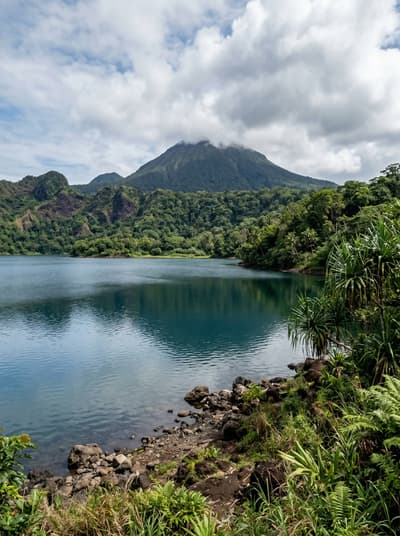
Gaua
Vanuatu
A volcanic lake drains into the ocean via a waterfall that plunges through untouched jungle.
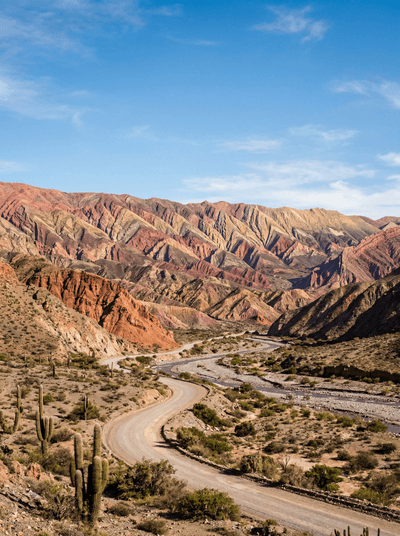
Quebrada de Humahuaca
Argentina
A canyon of fourteen-colour hills where Inca trails thread through villages older than the conquest.
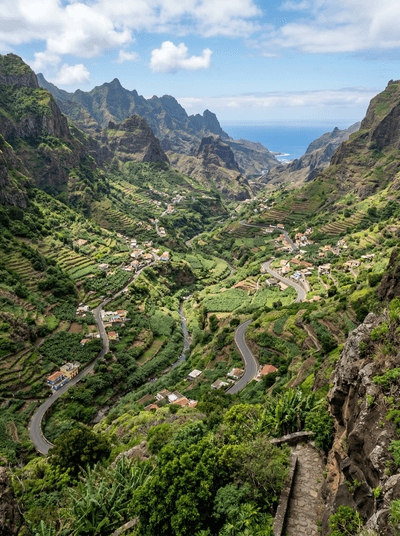
Vale do Paúl
Cape Verde
Sugarcane terraces spill down a volcanic crater into the greenest valley in the archipelago.
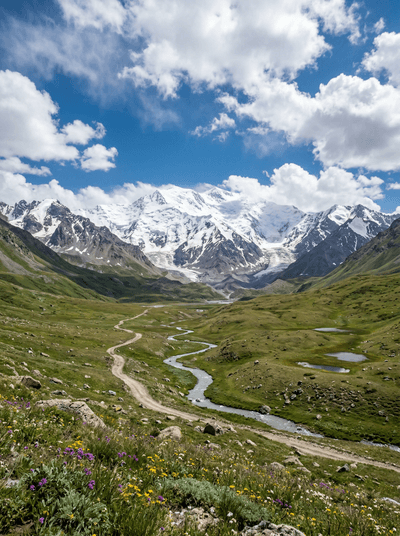
Achik-Tash
Kyrgyzstan
Yurt camps at 3,600 metres beneath a 7,134-metre peak, alpinists and trekkers sharing vodka at sunset.
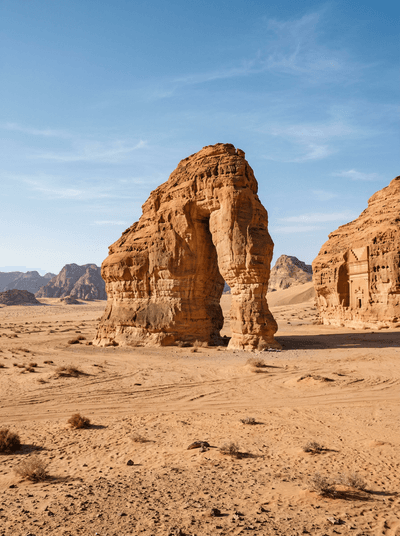
Al-Ula
Saudi Arabia
Nabataean tombs carved into sandstone cliffs that glow amber at dusk.
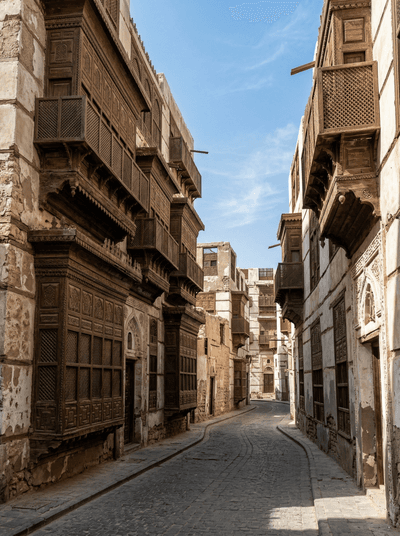
Jeddah Al-Balad
Saudi Arabia
Coral-stone towers with carved wooden balconies leaning over spice-scented alleys.
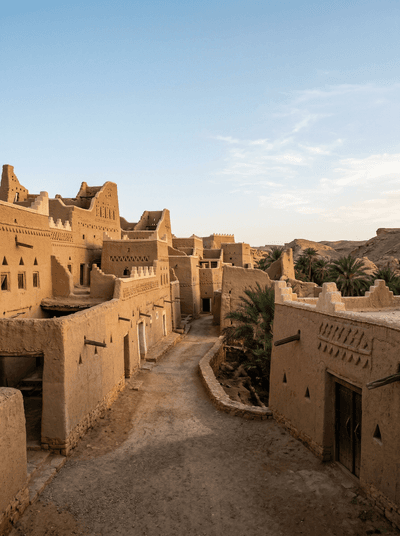
Diriyah
Saudi Arabia
Mud-brick fortress walls still sharp-edged against the Najdi sky after three centuries.
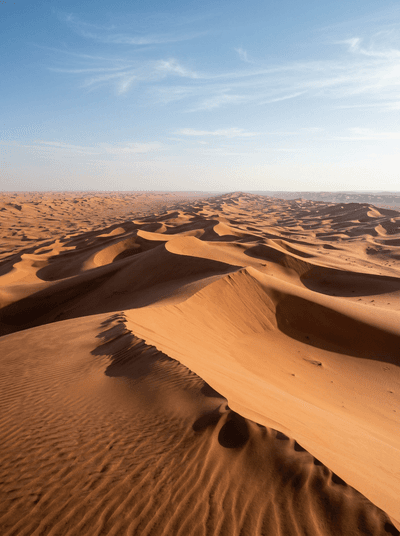
Rub' al Khali
Saudi Arabia
Dunes 250 metres high stretching unbroken to every horizon, silence pressing like weight.