Peru
Waqrapukara
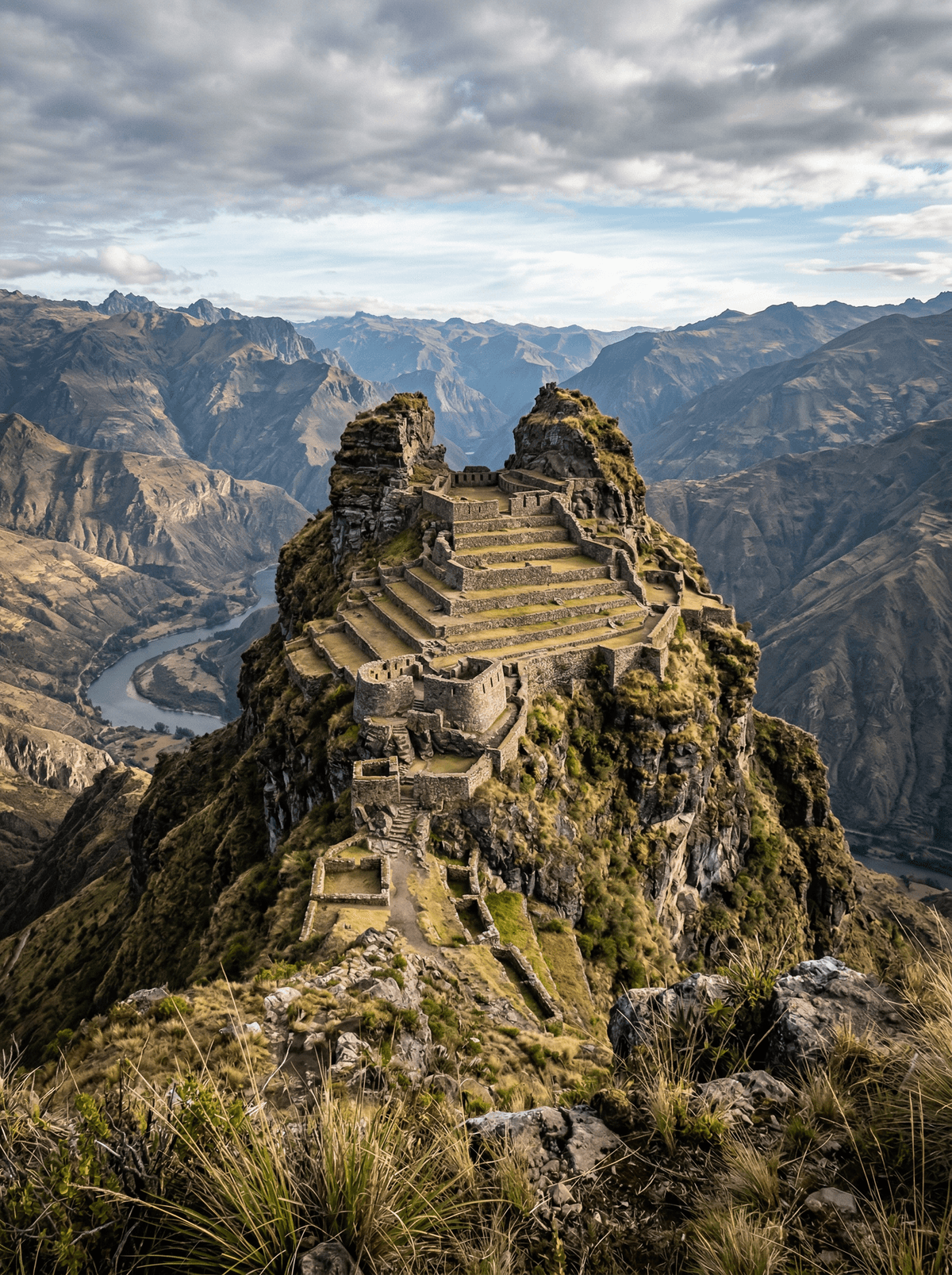
Twin stone horns on a knife-edge ridge at 4,300 metres, built to command the sky.
Two stone horns punch skyward from a cliff edge at 4,300 metres, canyon country dropping away beneath them into shadow. The wind at the top is relentless, the grass bent flat, the ruins far from any road. Waqrapukara was positioned for spectacle — architecture and living rock fused into one silhouette against the sky.
Waqrapukara — 'horn fortress' in Quechua — crowns a rock promontory in Cusco's Acomayo province, recognised as national cultural heritage in 2017 and still gloriously absent from the standard itinerary. The twin horned towers were likely ceremonial rather than military, pre-Inca Canchis work overlaid with Inca stonework, terraces and stairways falling away toward the gorge. Several trailheads serve the site with walking times that vary by route, so the approach is chosen locally — all of them cross exposed, wide-open puna at serious altitude, where vicuña graze the grasslands and weather turns fast. The final ridge delivers the reveal all at once: horns, cliff and canyon in a single hard-lit frame.
Solo
A solitary pilgrimage — hours of high grassland, then a site far off the standard itinerary. The summit payoff feels personal.
Friends
Sharing the altitude slog and the disbelief as the horns clear the final ridge earns the bragging rights; post-trek cuy in Acomayo seals them.
- Twin horned towers rise from a knife-edge ridge at 4,300 metres over canyon country.
- Pre-Inca Canchis and Inca stonework merge with the living rock into one silhouette.
- The approaches cross exposed puna at serious altitude — vicuña country, wide open.
- Several trailheads serve the ruins — chosen locally, all high, all wide open.
Cuy al horno with papas huayro back in Acomayo after the trek.
Mote — chewy boiled hominy — beside highland stews, filling after hours of walking.
Arenal & La Fortuna
Costa Rica
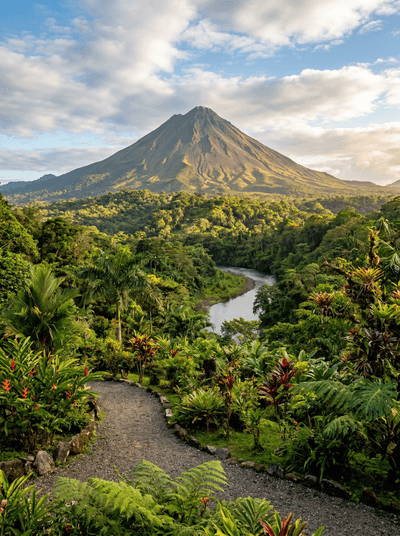
Hot springs steaming through jungle beneath a volcano's perfect cone at dusk.
Drakensberg
South Africa
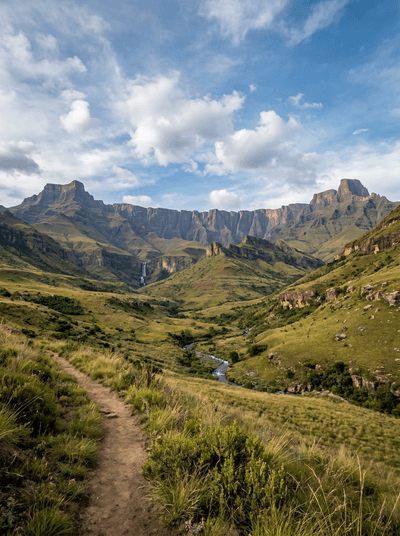
Basalt walls rise above sandstone caves painted across thousands of years.
Parque Nacional Volcán Isluga
Chile
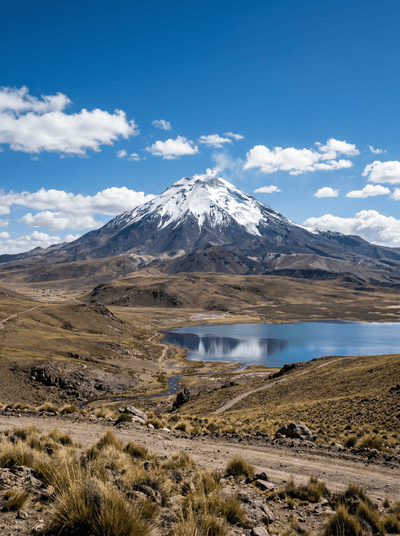
Volcanic horizons and high wetlands surround living Aymara settlements in the altiplano.
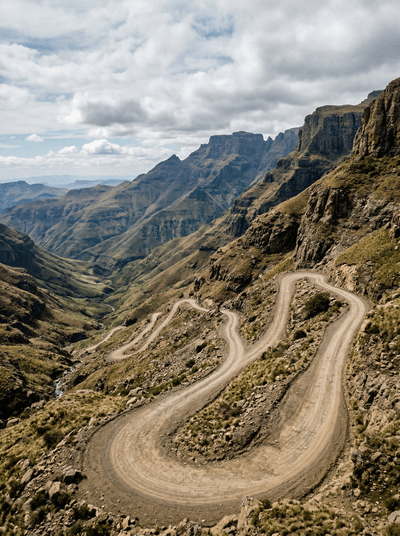
Sani Pass
South Africa
A switchback road climbs from green foothills to a high border above the clouds.
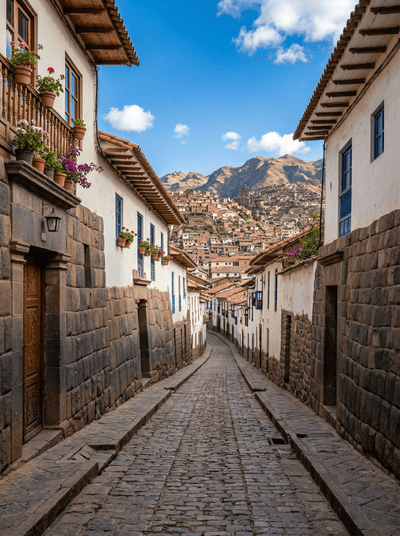
Cusco
Peru
Inca walls fitted so tightly a knife blade won't slide between the stones.
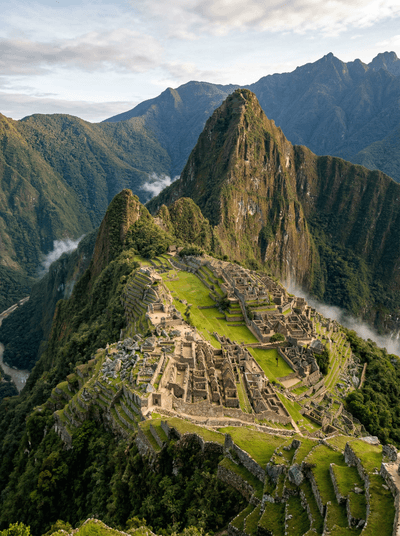
Machu Picchu
Peru
Cloud forest parts at dawn to reveal granite terraces balanced on the edge of the world.
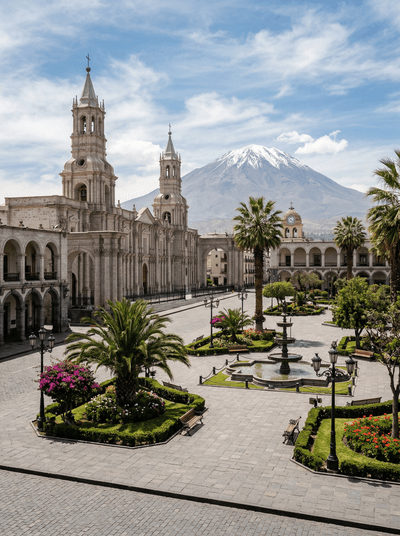
Arequipa
Peru
A city carved from white volcanic stone that glows amber under three volcanoes.
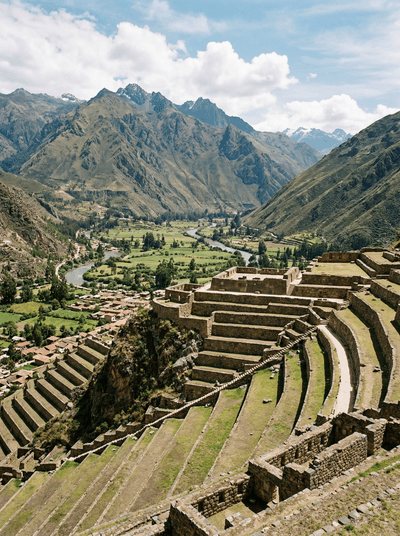
Sacred Valley (Ollantaytambo)
Peru
Inca water still flows through stone channels beneath the windows of a living town.